Luxury has spent much of the past decade discovering how much pricing power it had. In 2026, a different question is becoming harder to ignore: how much of that additional value can the client still see?
The distinction matters. BCG and Altagamma’s 2026 True-Luxury study found that 70 per cent of consumers had walked away from a purchase because they considered the price unjustified. The effect was not confined to aspirational clients, and more than half of those who rejected a purchase stayed within the brand or the luxury sector by choosing another product or another house. The report’s implication is unusually direct: pricing strategy and merchandising-grid architecture require rigorous review.
This does not mean luxury needs to become cheaper. A €10,000 object can feel coherent while a €2,000 one feels expensive. What the client is evaluating is the relationship between the number on the tag and everything supporting it: design, materials, craftsmanship, rarity, service, longevity, experience and the authority of the house itself.
Luxury therefore has a broader architecture problem. Entry products, core collections, icons and exceptional pieces need to make sense in relation to one another. Categories need to play distinct roles. At the highest levels, where the object alone may no longer explain the full difference in price, an impeccable and deeply personalised client experience becomes part of the value itself.
Price can still signal exclusivity. First, the house has to make the value behind it legible.
A PRICE LADDER SHOULD EXPLAIN ITSELF
Most luxury portfolios contain some version of a ladder: an accessible first encounter, a core business, recognisable icons and a more exceptional level built around rare materials, complex execution, limited availability or bespoke service.
The strength of that ladder does not come from the number of price points. It comes from whether the client can understand what changes between them.
An entry product should already feel complete. Its role is not to imitate the top of the range with visibly fewer qualities, but to offer a credible first expression of the house. A core product needs enough product substance and identity to justify repeat purchase. An icon commands a premium because it concentrates recognisable design, craft, cultural relevance or history in an object with authority of its own. Exceptional pieces should then change the proposition more profoundly, through rarity, material, time, expertise, personalisation or access.
When the difference between two price levels is clear, a significant jump can be accepted. When it is difficult to identify what has changed beyond the ticket itself, even a smaller increase can create resistance.
That distinction matters after several years of price-led growth. McKinsey’s State of Fashion 2026 describes a luxury sector recalibrating after brands raised prices without always delivering corresponding improvements in product quality or creativity. The same research highlights product quality and craftsmanship, better in-store service and stronger pre- and post-purchase services among the factors that could encourage high-net-worth clients to spend more.
Those expectations describe a system rather than a single product attribute. The client is reading the object, the boutique, the advisor and what happens after purchase as parts of the same proposition.
THE ENTRY POINT IS PART OF THE BRAND
This is why the current conversation around aspirational luxury needs nuance.
Reintroducing more accessible products does not automatically dilute a house. The strategic question is what those products teach a first-time client about the brand.
Prada offers a useful illustration. The house’s newly completed Prada Galleria in Milan brings together retail, culture and hospitality across the historic site where the original Fratelli Prada boutique opened in 1913. Prada’s own description of the project includes an exclusive private-client salon, alongside its stores, Marchesi 1824 and a permanent exhibition dedicated to the brand. At the same time, the current product architecture still includes clearly different entry levels: a leather card holder on the French website begins at €330, while the Re-Edition 2000 Re-Nylon mini bag is listed at €980.
The point is not that these objects are “cheap” ways into Prada. They are not. Their role is to provide a resolved expression of the house at a different scale of spend. The mini bag still carries an identifiable Prada silhouette, material story and design language; the card holder retains the Saffiano and leather codes through which many clients first encounter the maison.
This is what a functioning entry point should do. It should not feel like a compromised version of something better. It should feel like a complete object whose value is proportionate to its place in the architecture.
The first product a client can afford may also be the product through which they learn what the house considers worth paying for. Entry pricing is therefore part of brand education, not simply customer acquisition.
SOMETIMES THE CLIENT MOVES SIDEWAYS, NOT DOWN
Price architecture becomes even more interesting when considered across categories.
The consumer who becomes more selective about a handbag does not necessarily leave premium consumption altogether. In China, Circana’s prestige-beauty data for January to November 2025 showed e-commerce growth of 26 per cent in fragrance, 15 per cent in skincare and 14 per cent in makeup. In the second quarter of 2026, McKinsey also found beauty among the relatively few semi-discretionary categories in China where net spending intent had increased, while jewellery was among the categories with negative net intent.
These datasets do not prove that the same client is substituting a fragrance for a bag. They do, however, illustrate why “trading down” is often too crude a description of changing luxury behaviour. Spend can move across categories when one category offers a more convincing relationship between expenditure, enjoyment and perceived quality.
A consumer may prefer to feel exceptional at the top of a more accessible category rather than compromised at the bottom of a more expensive one. A prestige fragrance, highly resolved beauty object or small leather good can provide a full expression of design, packaging, consultation and ritual at a level of spend that still feels significant, but easier to justify.
For multi-category houses, this makes category architecture strategic. Beauty does not need to mimic leather goods. Jewellery does not need to reproduce the ladder of fashion. Fragrance, eyewear, accessories, hospitality or small leather goods can each introduce a client to the brand in a different way, without forcing the hero category to become artificially accessible.
The question is not simply “How do we lower the entry price?” It is “Where can this house deliver its value most convincingly at this level of spend?”
AT THE TOP, EXPERIENCE BECOMES PART OF THE VALUE
The other end of the architecture deserves equal scrutiny.
Ultra-luxury clients can afford the product. The challenge is giving them sufficient reason to choose it, return to it and sustain a relationship with the house.
Here, the value equation widens. Product excellence remains fundamental, but recognition, discretion, access, expertise and service can carry increasing weight. McKinsey’s 2026 research on luxury clients in the United States and China found that exclusivity is increasingly read through recognition and high-touch experiences rather than scarcity alone. In China in particular, established brands retain an advantage when they combine authority with service that makes clients feel known rather than simply sold to.
This is where pricing architecture and client experience meet.
A client acquiring an exceptional jewellery piece or commissioning a highly crafted object should encounter a different depth of service from someone making an initial purchase. Private presentation, access to expertise, sourcing, personalisation, alterations, repair, dedicated appointments and continuity with a trusted advisor can all become part of what distinguishes the highest level.
The distinction still needs care. A house can create differentiated levels of service without allowing the basic quality of attention to collapse below them. As MAENA explored in The Luxury of Being Remembered, the strongest personalisation is not the multiplication of options. It is the precision of attention: understanding why someone has come, remembering relevant preferences, applying product knowledge to a specific life and maintaining continuity after the transaction.
That principle becomes even more important as prices rise. The higher the expectation, the less tolerance there is for a disconnected CRM record, a generic follow-up, poor aftercare or an advisor who has to relearn the relationship at every appointment.
Impeccable ultra-luxury service therefore depends on operational architecture as much as hospitality. Inventory visibility, client history, aftercare, advisor expertise and sufficient autonomy need to work together. The machinery should remain largely invisible. What the client feels is continuity.
At this level, experience is not decoration surrounding the product. It participates in the justification of value.
PRICING POWER HAS NOT DISAPPEARED
There is an important counterpoint. The current challenge does not demonstrate that luxury pricing power is exhausted.
Richemont offers useful evidence. Faced with higher gold prices, adverse currency movements and additional cost pressures, its Jewellery Maisons implemented what the group described as measured price increases during the financial year ended March 2026. Cartier, Van Cleef & Arpels, Buccellati and Vhernier nonetheless increased combined sales by 14 per cent at constant exchange rates over the year. In the following quarter, Jewellery Maisons sales rose by 24 per cent at constant rates.
The figures do not show that higher prices drove demand. They show something more relevant: price increases and strong demand can coexist when the broader proposition remains compelling. Richemont itself attributed the first-quarter performance to innovation underpinning the desirability of iconic creations, while continuing to invest in craftsmanship, heritage preservation and its retail footprint.
That is why a universal prescription would be misleading. A jewellery maison responding to the rising cost of precious materials does not face the same equation as a fashion house deciding how widely to distribute an icon. A fragrance range built around frequent discovery does not require the same ladder as high jewellery. Different categories can sustain different price structures because the sources of value are different.
Pricing power is therefore strongest when it reflects the specific economics and identity of the category: materials, production, scarcity, creative authority, service and the role each product plays within the wider portfolio.
The capacity to raise a price is not, by itself, proof of brand strength. The stronger proof is that the house can make a considered pricing decision without weakening the client’s belief in the value behind it.
THE VALUE ARCHITECTURE HAS TO HOLD
The most useful way to assess luxury pricing today may therefore be to stop looking at price in isolation.
Look instead at the distance between each level. What does the client receive at entry? What becomes richer or rarer in the core? Why does the icon deserve its premium? At what point do exceptional materials or craft genuinely change the object? Which categories provide the most convincing gateway into the house? And, as the relationship progresses, how do knowledge, service, access and personalisation evolve around the client?
A strong architecture does not require every product to be accessible, nor every customer to reach its highest level. It requires each level to have a reason to exist.
For some houses, that may mean restoring credible entry points. For others, it may mean strengthening the core rather than multiplying products around it. At the very top, it may require investing as seriously in human service and long-term client knowledge as in the object itself.
Price will always perform several roles in luxury. It reflects cost, protects margins, creates distance and participates in exclusivity. It can also reinforce desire. But it is most powerful when it confirms value that the client can already perceive.
The strongest luxury architectures do not make every product accessible. They make every price understandable.
Marine Moureaux-Gall / MAENA Agency
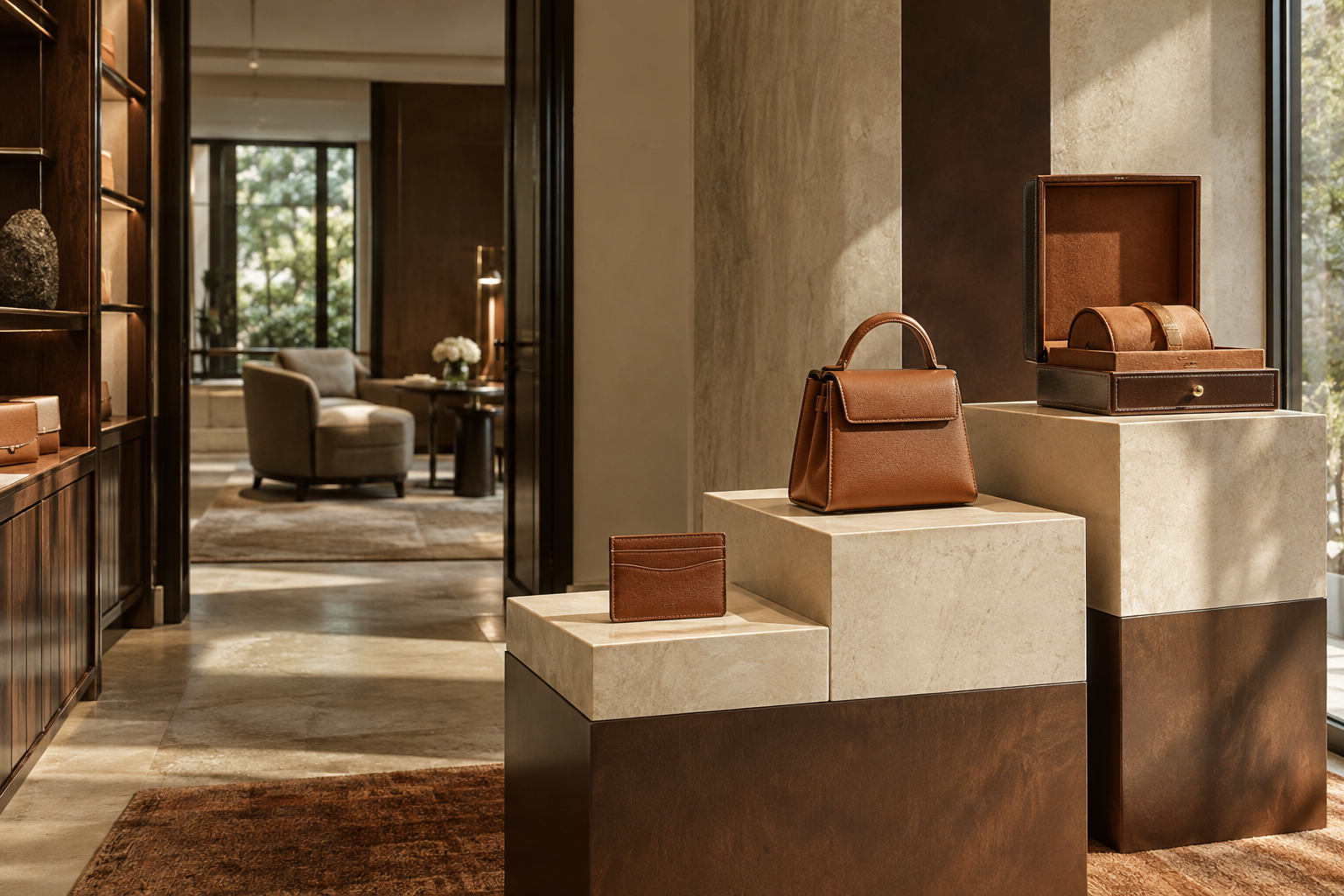
Featured image credit: AI-generated editorial visual, art-directed by MAENA Agency.